
Infertility is common. The NHS says around 1 in 7 couples may have difficulty conceiving, and that a common cause in men is poor-quality semen, and that possible reasons include a very low sperm count or sperm that are not moving properly. Its list of risk factors includes smoking, drinking too much alcohol, being overweight, exposure to certain pesticides, solvents and metals, and stress, which in severe cases may also affect sperm production (NHS, Infertility; NHS, Causes).
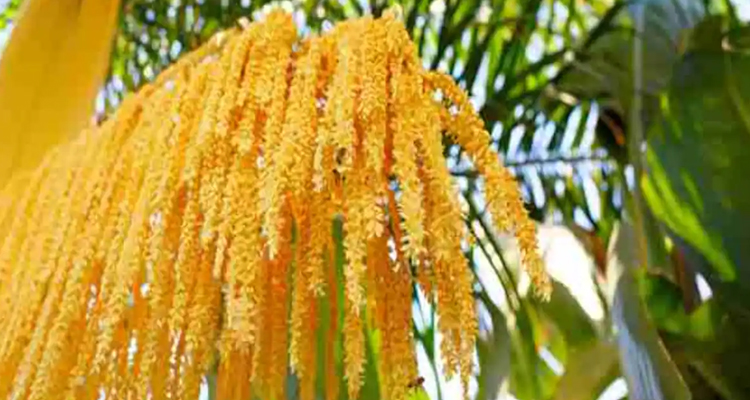
Date palm pollen is the male reproductive dust of palm flowers. A 2016 review says it has been used as a dietary supplement since ancient times, especially as an aphrodisiac and fertility enhancer in both women and men (Tahvilzadeh et al., 2016). An earlier version of this page said the pollen increases sperm count and motility. This update looks at the studies behind that line, and in particular at a group of small Iranian trials that measured sperm alongside antioxidant markers.
This is general information, not medical advice. If you are trying for a baby, or thinking of taking pollen or any other herbal product, speak to a doctor first.
What the pollen contains
The same 2016 review lists amino acids, fatty acids, flavonoids, saponins and estroles among the compounds isolated from the pollen. It also notes that there are few clinical trials in humans, while various experimental studies have looked at its effects on reproduction.
Much of the research on sperm starts from one idea. A 2015 review led by researchers in Bandar Abbas, Iran, describes oxidative stress as a key factor in male infertility and proposes that antioxidants in the pollen could help protect sperm from it (Fallahi et al., 2015). That review sets out a theory. The trials below tested parts of it.
Three small trials in infertile men
In a 2021 controlled trial, 60 infertile men and 20 fertile men with normal sperm were recruited. The infertile men took gelatin capsules of pollen at a stated dose of 400 mg/kg daily for 30 days. Afterwards, the activity of four antioxidant genes (NRF2, SOD2, GPX4 and CAT) was significantly higher, and the authors report that these rises were linked to better sperm count, motility and morphology. The authors open the paper by stating that oxidative stress is responsible for 30 to 40% of male infertility. The journal later published a corrigendum to this article.
A 2023 trial from the same university gave 40 infertile men pollen capsules (400 mg/kg) for 74 days, with 10 fertile men with normal sperm as controls. Semen volume, sperm count and sperm morphology improved significantly, levels of a compound called 8-isoprostane fell, and two more antioxidant genes, PRDX1 and PRDX6, became more active. The authors call their explanation a hypothesis and write that further large-scale studies are required.
A third trial, also published in 2023, was single-blind and placebo-controlled. Its abstract says 62 infertile men aged 22 to 42 took part, then describes 30 men in the treatment group and 20 on placebo for three months. Each capsule held palm pollen extract (350 mg) together with black seed (Nigella sativa) extract (250 mg). Sperm count and progressive motility rose, morphology did not change significantly, and testosterone, FSH and LH rose compared with the placebo group. Because the capsule mixed two plants, this trial cannot show which of them caused the changes.
What these trials do not show
In the first two trials, the comparison group was fertile men with normal sperm, not infertile men taking a dummy capsule. So they cannot show how much the infertile men would have improved anyway over 30 or 74 days. The third trial had a placebo, but its capsule was not pollen alone. None of the three abstracts reports whether any couple went on to conceive, which is the outcome most readers care about.
Two other human studies, one comparing pollen with a drug and one with no comparison group at all, are covered in our article on pollen and male fertility. A 2020 systematic review of 26 clinical trials on different parts of the date palm found that 80% had performance and detection bias, and concluded that there is not enough clinical evidence to support the effects claimed in other reviews and in traditional medicine (Bagherzadeh Karimi et al., 2020).
Rat studies on toxins and sperm
The old page said the pollen reduces chemically induced toxicity in the male reproductive system. That line comes from animal work. In one study, adult male rats were given a single injection of cadmium, a metal that damages the testes, and then 40 mg/kg of pollen extract by mouth every day for 56 days. The pollen restored sperm production and reduced the toxic effects of cadmium to the levels seen in the control animals (El-Neweshy et al., 2013).
In healthy rats, a 2014 study tested three doses of pollen for 35 days. The 120 and 240 mg/kg doses raised sperm count and motility compared with untreated rats, while LH and testosterone rose noticeably only at 120 mg/kg (Mehraban et al., 2014). A 2015 rat study on testicular damage caused by thyroid disorders reported similar protection, but PLOS One retracted it in May 2026. Results in rats do not tell us what a capsule will do for a man.
Women and the pollen
The old page also mentioned possible effects on the female reproductive system. A 2026 narrative review, again led by authors from Hormozgan, says evidence from animal and human studies suggests the pollen positively affects hormones such as estrogen, progesterone and FSH, improves ovarian function and egg quality, and eases menopausal symptoms such as vaginal dryness. The same review lists open problems, including variable composition and a lack of standard clinical protocols, and calls for rigorous clinical validation (Fallahi et al., 2026). It is a narrative review, not a systematic one.
Safety and next steps
Pollen is also an allergen. A 2021 study from Saudi Arabia calls the date palm pollen an important allergen and found high levels of biogenic amines, including histamine, in samples collected there (Alharbi and Mousa, 2021).
The research on date palm pollen and sperm is early. A handful of small trials, three of them with authors from one Iranian university, report better sperm measures, and none of them reports pregnancies. The NHS says it is a good idea to see a GP if you have not conceived after a year of trying, and that semen analysis is one of the tests used to check for problems such as a low sperm count (NHS, Diagnosis).
Dates, the fruit, were not tested in any of these trials. Our dates are listed on the products page, and you can reach the team through the contact page.
References
- Tahvilzadeh M, Hajimahmoodi M, Rahimi R. The role of date palm (Phoenix dactylifera L) pollen in fertility: a comprehensive review of current evidence. J Evid Based Complementary Altern Med. 2016;21(4):320-4. PMID 26438718
- Fallahi S, Rajaei M, Malekzadeh K, Kalantar SM. Would Phoenix dactylifera pollen (palm seed) be considered as a treatment agent against males’ infertility? A systematic review. Electron Physician. 2015;7(8):1590-6. PMID 26816585
- Fallahi S, et al. The effect of Phoenix dactylifera pollen on the expression of NRF2, SOD2, CAT, and GPX4 genes, and sperm parameters of fertile and infertile men: a controlled clinical trial. Int J Reprod Biomed. 2021;19(6):545-558. PMID 34401649 (corrigendum: PMID 34568737)
- Falahati AM, et al. Effects of date palm pollen supplementations on the expression of PRDX1 and PRDX6 genes in infertile men: a controlled clinical trial. Int J Fertil Steril. 2023;17(3):201-207. PMID 37183847
- Hajb A, et al. The effect of palm pollen and black seed pollen on male sex hormones and sperm quality: a single-blind, placebo-controlled clinical trial study. Int J Fertil Steril. 2023;17(1):75-79. PMID 36617207
- Bagherzadeh Karimi A, et al. Clinical effects of date palm (Phoenix dactylifera L.): a systematic review on clinical trials. Complement Ther Med. 2020;51:102429. PMID 32507440
- El-Neweshy MS, El-Maddawy ZK, El-Sayed YS. Therapeutic effects of date palm (Phoenix dactylifera L.) pollen extract on cadmium-induced testicular toxicity. Andrologia. 2013;45(6):369-78. PMID 22998418
- Mehraban F, et al. Effects of date palm pollen (Phoenix dactylifera L.) and Astragalus ovinus on sperm parameters and sex hormones in adult male rats. Iran J Reprod Med. 2014;12(10):705-12. PMID 25469129
- PLOS One Editors. Retraction: Therapeutic potential of date palm pollen for testicular dysfunction induced by thyroid disorders in male rats. PLoS One. 2026;21(5):e0348626. PMID 42085417
- Fallahi S, Dastsouz F, Salehpour Z, Gholami F. The role of date palm pollen in women’s health and fertility: a narrative review. Int J Reprod Biomed. 2026;24(7):557-570. PMID 42774627
- Alharbi AB, Mousa HM. Study of the expected impact of palm pollen on human respiratory tract allergy. Pak J Biol Sci. 2021;24(3):326-334. PMID 34486317
- NHS. Infertility, Infertility: causes and Infertility: diagnosis.