
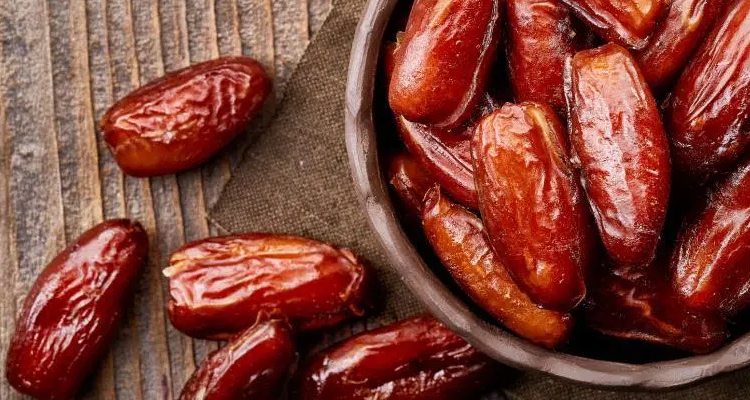
This page used to say that regular eating of dates helps the heart and fights chest pressure, breathing problems and swollen ankles, and that Dates are recommended for the heart by health experts. None of that had a source. This update checks the heart claims one by one against studies and health-service pages, and keeps only what those sources say.
What heart disease is
The NHS describes coronary heart disease as what happens when the heart’s blood supply is blocked or interrupted by a build-up of fatty substances in the coronary arteries. Its main symptoms are chest pain (angina), shortness of breath, pain in the neck, shoulders, jaw or arms, feeling faint and feeling sick. Some people have no symptoms before it is diagnosed (NHS, Coronary heart disease).
High blood pressure is one of the conditions that raise that risk, and the NHS says it does not usually cause any symptoms, so the only way to find out is to have it checked. In the UK the NHS tells people to call 999 straight away for sudden chest pain or pressure that does not go away, because it could be a heart attack (NHS, High blood pressure).
Potassium and blood pressure
The heart case for dates rests mainly on two nutrients, and potassium is the first. The World Health Organization says increasing potassium intake significantly reduces blood pressure in adults. It lists dates by name among the fruits that contain potassium, next to bananas and papayas, and suggests adults get at least 3,510 mg a day (WHO eLENA, potassium).
The review behind that advice pooled 22 randomised trials with 1,606 participants. Higher potassium intake lowered systolic blood pressure by 3.49 mm Hg in adults, an effect seen in people with high blood pressure but not in those without it. Across 11 cohort studies, higher potassium intake was linked with a 24% lower risk of stroke, which the authors rate as moderate-quality evidence (Aburto et al., BMJ 2013). Their conclusion covers most people “without impaired renal handling of potassium”.
USDA FoodData Central gives Medjool dates 696 mg of potassium per 100 g, and one pitted Medjool date weighs 24 g, so one date has about 167 mg and three have about 500 mg. That is roughly a seventh of the WHO figure (FDC 168191). Deglet Noor dates are listed at 656 mg per 100 g (FDC 171726).
Fibre
The second nutrient is fibre. A 2019 series of reviews in The Lancet covered 185 prospective studies and 58 clinical trials. In the observational data, people who ate the most fibre had 15–30% lower rates of cardiovascular death, coronary heart disease and stroke than those who ate the least. In the trials, higher fibre intake went with lower body weight, systolic blood pressure and total cholesterol. The biggest risk reductions were seen at 25–29 g of fibre a day (Reynolds et al., Lancet 2019). A Medjool date has 6.7 g of fibre per 100 g, so one 24 g date gives about 1.6 g.
For preventing coronary heart disease, the NHS recommends a low-fat, high-fibre diet with plenty of fresh fruit and vegetables (5 portions a day) and whole grains, no more than 6 g of salt a day, and avoiding foods high in saturated fat (NHS, Coronary heart disease prevention). Dates contain very little fat. FDC lists Deglet Noor dates at 0.39 g of fat, 0.032 g of saturated fat and 0 mg of cholesterol per 100 g, and 2 mg of sodium.
What happened when people ate dates
Nutrients in a food are one thing. Trials that fed people dates are the better test, and the three small trials below found less than the old version of this page promised.
- In one randomised trial, 79 patients with type 2 diabetes ate either 60 g of dates or 60 g of raisins a day for 12 weeks, and 61 completed it. There was no difference between or within groups for lipids, systolic or diastolic blood pressure, or C-reactive protein, and the authors saw “no beneficial therapeutic effects of date fruit on other cardiovascular indices” (Butler et al., Nutrients 2022).
- In another randomised trial, 100 people with type 2 diabetes either ate three dates a day for 16 weeks or avoided dates. Total cholesterol fell by 0.209 mmol/L in the date group. LDL fell by 0.171 mmol/L, but its 95% confidence interval (−0.358 to 0.016) crosses zero (Alalwan et al., Nutrients 2020).
- In a pilot study, 10 healthy people ate 100 g a day of Medjool or Hallawi dates for 4 weeks. Total, LDL, HDL and VLDL cholesterol did not change significantly, and triglycerides fell by 8% after Medjool and 15% after Hallawi (Rock et al., J Agric Food Chem 2009).
Blood pressure was measured only in the first of these trials, and it did not change. The cholesterol results are mixed, and the trials are small, with 10 to 100 participants each.
Where dates fit
Dates are also high in sugar: FDC lists 66.5 g of total sugars per 100 g of Medjool, about 16 g in one date. The NHS heart page says to avoid too much sugar, because it can raise the chance of developing diabetes, which in turn raises the chance of coronary heart disease. So the honest version of dates and your heart is this: dates bring potassium, which is why the WHO names them, plus fibre and very little fat, and the NHS diet for heart health is low-fat and high-fibre. In the one trial above that measured it, eating dates did not lower blood pressure.
You can see our dates on the products page, or reach the team through the contact page. This article is general information, not medical advice. If you have a heart condition, high blood pressure or kidney disease, ask your doctor before changing your diet.
References
- NHS. Coronary heart disease. nhs.uk
- NHS. Coronary heart disease: prevention. nhs.uk
- NHS. High blood pressure. nhs.uk
- WHO e-Library of Evidence for Nutrition Actions. Increasing potassium intake to reduce blood pressure and risk of cardiovascular diseases in adults. who.int
- Aburto NJ, et al. Effect of increased potassium intake on cardiovascular risk factors and disease: systematic review and meta-analyses. BMJ. 2013;346:f1378. PMID 23558164
- Reynolds A, et al. Carbohydrate quality and human health: a series of systematic reviews and meta-analyses. Lancet. 2019;393:434-445. PMID 30638909
- Butler AE, et al. Effect of date fruit consumption on the glycemic control of patients with type 2 diabetes: a randomized clinical trial. Nutrients. 2022;14:3491. PMID 36079749
- Alalwan TA, et al. Effects of daily low-dose date consumption on glycemic control, lipid profile, and quality of life in adults with pre- and type 2 diabetes: a randomized controlled trial. Nutrients. 2020;12:217. PMID 31952131
- Rock W, et al. Effects of date (Phoenix dactylifera L., Medjool or Hallawi variety) consumption by healthy subjects on serum glucose and lipid levels and on serum oxidative status: a pilot study. J Agric Food Chem. 2009;57:8010-7. PMID 19681613
- USDA FoodData Central. Dates, medjool (SR Legacy, FDC 168191) and Dates, deglet noor (SR Legacy, FDC 171726). fdc.nal.usda.gov