
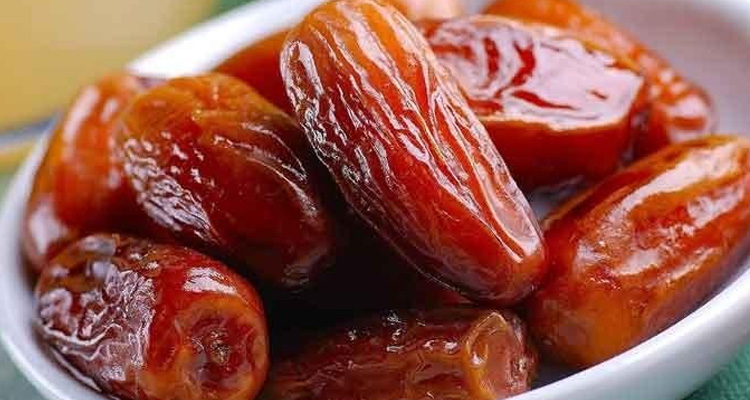
Dates can be eaten as a sweet with coffee or baked into a cake, and they can also be eaten as part of a meal. Whether date fruit is a food or only a treat is a fair question, and the research on the date palm answers it plainly.
A staple where the palm grows
A 2025 review in Molecular Genetics and Genomics describes the date palm as a vital fruit crop of North Africa, the Middle East and South Asia, serving as both a staple food and a source of income. A 2024 systematic review in Critical Reviews in Food Science and Nutrition goes further back and calls it one of the oldest staple nutritive foods, mainly in the Arabian Peninsula.
That is the plain answer to the question. Across North Africa, the Middle East and South Asia the date is a staple food. Thinking of it only as a cake ingredient misses most of its history.
Where dates sit in a food guide
The NHS eating guide puts dates with the other fruit. The NHS 5 A Day guidance in the UK says a 30g portion of dried fruit, “such as currants, dates, sultanas and figs”, counts as one of your 5 A Day. The same page asks that dried fruit be eaten at mealtimes rather than as a snack between meals, to reduce the impact on teeth.
So the guideline treats dates as part of a meal and not as a sweet to graze on through the afternoon.
A semi-dry date works well for that. Sayer dates from Iran’s Khuzestan province are amber-brown and semi-dry, easy to chop into breakfast or keep in a jar on the table.
Thousands of varieties, a handful in trade
The 2025 review counts more than 5,000 date cultivars reported worldwide, with only a few being commercially exploited. The few grown commercially are very different from each other.
Ajwa from Madinah is small, roundish and near-black, with finely wrinkled skin and a soft bite. Mazafati from Bam in Iran’s Kerman province is dark, very soft and high in moisture, so it needs the fridge. Deglet Noor, from Tunisia and Algeria, is golden, translucent and semi-dry. Medjool, which originated in Morocco, is large and very soft with a rich caramel taste. You can see the full range in the Green Diamond shop.
Fresh, dried and the rest of the palm
Traders use two words for ripeness. Rutab is the soft, fresh-ripe stage. Tamr is the fully ripe, drier stage. Many soft varieties are cold-chained, which is why rotab Mazafati can be bought all year.
The fruit is not the only part people have used. The 2024 review gathers traditional uses of the date fruit and of other parts of the palm from around the world.
Putting dates on the plate
If you want to eat dates as food rather than as a treat, put them in meals. Chop a few into oats or yoghurt at breakfast. Add them to a rice dish or a stew for sweetness instead of sugar. Stuff them with nuts and serve them with coffee after lunch. Keep soft dates like Mazafati in the fridge and semi-dry dates like Sayer in an airtight jar.
This article is general food information, not medical or dietary advice. If you have a health condition, ask your doctor or a dietitian how dates fit your diet.