
This page looks at how much iron dates really hold and where that iron fits in an everyday diet.
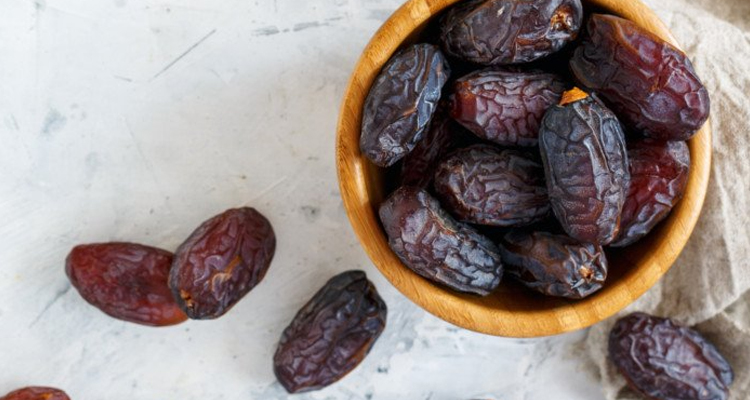
Dates bring fibre and minerals with them, and the iron in dates is part of that mix. Many Iranian dates reach buyers as soft or semi-dry fruit. Piarom dates are one of the dark, semi-dry types, grown in Hormozgan in Iran and known for their thin skin.
How much iron is in dates
USDA FoodData Central reference data (SR Legacy) gives figures for two date varieties. Medjool dates contain 0.9 mg of iron per 100 g. Deglet Noor dates contain 1.02 mg per 100 g. The same records give 6.7 g of fibre and 696 mg of potassium per 100 g for Medjool, and 8.0 g of fibre and 656 mg of potassium for Deglet Noor. USDA has no separate entry for Piarom, so there is no published figure to quote for it here.
To put that in context, the NHS gives the daily iron need as 8.7 mg for men aged 19 and over, 14.8 mg for women aged 19 to 49, and 8.7 mg for women aged 50 and over. A 100 g serving of Medjool covers about 10% of 8.7 mg, or about 6% of 14.8 mg. Deglet Noor comes to roughly 12% and 7%.
So dates add a little iron to the day but they are not a major source on their own.
What iron does in the body
The NHS puts the job of iron simply: “Iron is important in making red blood cells, which carry oxygen around the body.” That is the real utility of the iron in dates and in every other food. The NHS also says you should be able to get all the iron you need from your daily diet.
Where dates sit among iron foods
The NHS list of good sources of iron includes red meat, beans such as red kidney beans, edamame beans and chickpeas, nuts, dried fruit such as dried apricots, fortified breakfast cereals and soy bean flour. Dates sit on the same dried-fruit shelf, but at about 1 mg per 100 g they work best as one item in a varied plate. Eating them with beans, nuts or cereal gives a better total than leaning on dates alone.
Too much iron
The NHS page gives Department of Health and Social Care advice that most people should be able to get all the iron they need by eating a varied and balanced diet, and that anyone taking iron supplements should not take too much, as this could be harmful. At roughly 1 mg per 100 g, the Iron in dates is a small, food-level amount.
Choosing dates for the table
Medjool dates are large and very soft, with a rich caramel taste. Deglet Noor dates from Tunisia and Algeria are golden and semi-dry. For a dark, semi-dry date there are Piarom dates from Iran.
This article is general food information and not medical advice. Speak to a GP or a registered dietitian about your own iron needs.